
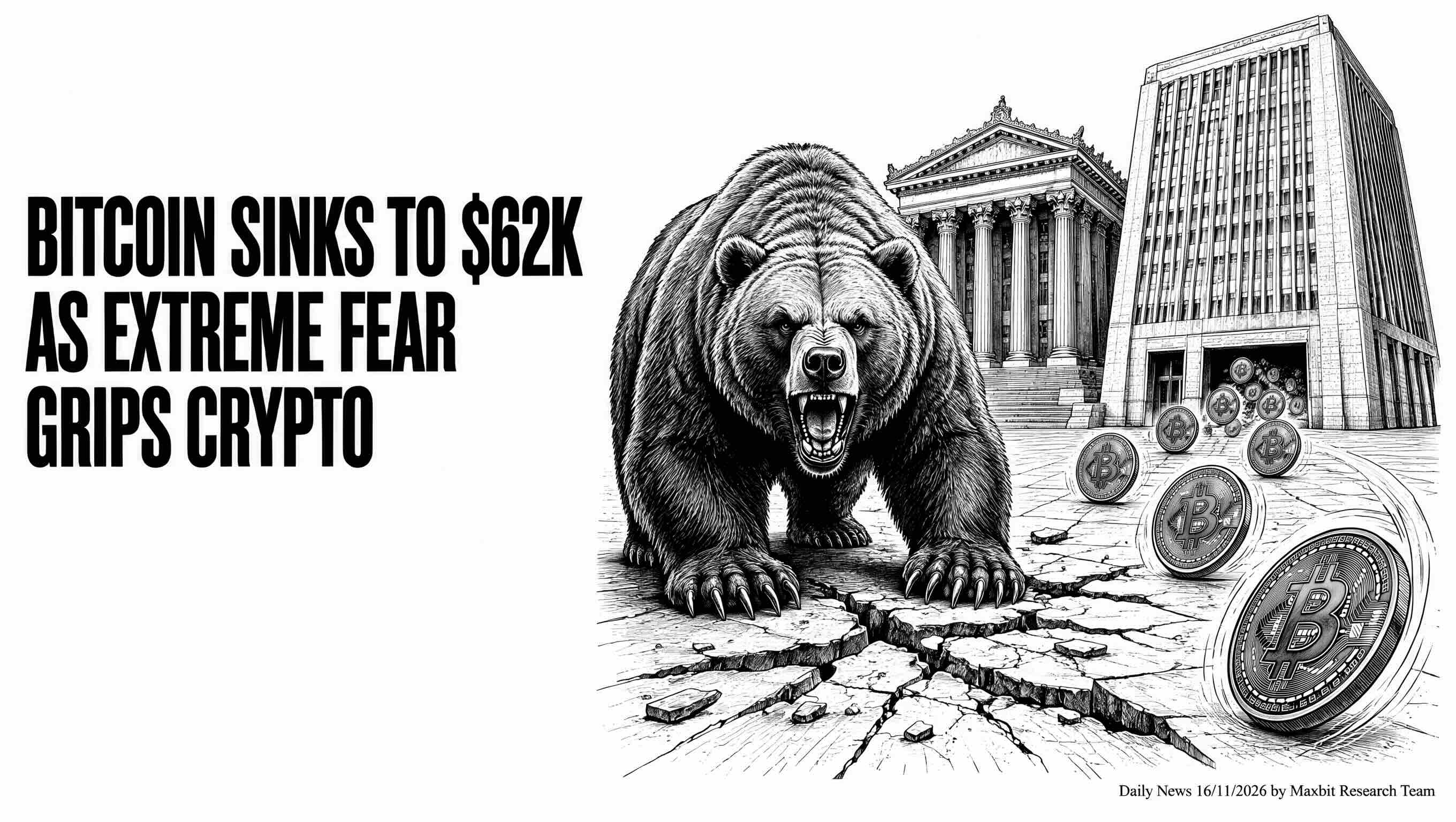
Bitcoin (BTC) slid to around $62,100 on Sunday, November 15, 2026 — its lowest level since early July and roughly 23% below the $80,000 area seen at the start of the month. The Crypto Fear & Greed Index plunged to 12–13, deep in "Extreme Fear" territory and the lowest reading in about 90 days. The sell-off extends the slide that pushed BTC below $70,000 on November 13, driven by fears of a Fed rate hike, seven straight days of institutional outflows from Bitcoin ETFs, and a wave of leveraged liquidations across the crypto market. This article summarizes the key numbers, the pressures behind the drop, support and resistance levels, and the events digital asset investors should watch this week.
Bitcoin Hits $62,000: Key Numbers
After breaking below $70,000 on Friday, November 13, BTC kept selling off through the weekend, slipping below its 200-week moving average near $67,800 before bottoming early Sunday and then rebounding to trade around $64,000–65,000. Over the week, the price fell roughly 15–16% (previous report: Bitcoin falls below $70,000).
| Metric | Latest data |
|---|---|
| Latest low (BTC) | ~$62,100 (Nov 15, 2026) — lowest since early July |
| Weekend price | Recovered to trade around $64,000–65,000 |
| Drop from early-month high | ~-23% (from ~$80,000–81,000 on Nov 4–5) |
| Distance from all-time high | ~-50% (ATH $126,080 on Oct 6, 2025) |
| US spot Bitcoin ETFs (Nov 9–13) | ~$1.07B net outflows — 7 straight trading days of outflows |
| IBIT (BlackRock), Nov 13 | ~$143.5M outflow (group total $185.4M) |
| Market-wide liquidations (24h) | Over $1B — some sources report nearly $2B |
| Crypto Fear & Greed Index | 12–13 (Extreme Fear), lowest in ~90 days |
| Ethereum (ETH) | ~$1,700–1,800 |
| Odds of a December Fed hike | ~85–89% (policy rate currently 3.75–4.00%) |
3 Factors That Pushed the Crypto Market Into "Extreme Fear"
1. Markets are betting on a December Fed rate hike
US October CPI rose 0.4% month over month, above expectations. As a result, CME FedWatch now implies roughly an 85–89% chance that the Fed will raise rates by 0.25% at its December 8–9 meeting, from the current 3.75–4.00% range. Higher rates increase the cost of holding risk assets such as Bitcoin and tend to pull money back toward bonds and the US dollar.
2. Institutional money keeps leaving Bitcoin ETFs
US spot Bitcoin ETFs have recorded net outflows for seven consecutive trading days. In the week of November 9–13 alone, outflows reached about $1.07 billion (Farside data), with BlackRock's IBIT seeing the largest withdrawals. Ethereum ETFs also lost roughly $340–400 million in the same week. Meanwhile, according to Coinbase Institutional, the supply of major stablecoins (USDT, USDC, DAI) has fallen by about $11.5 billion over 30 days — a sign of shrinking liquidity in the market.
3. Leverage liquidations and confidence-denting headlines
Once key support levels broke, forced liquidations cascaded, totaling more than $1 billion in 24 hours, mostly long positions. In addition, according to crypto.news, MSCI has confirmed it will remove Strategy — the listed company holding the most BTC — from its indexes after the close on November 30, which could force index funds to sell the stock and indirectly weigh on sentiment toward crypto.
⚠️ "Extreme Fear" does not mean the bottom is in: A very low fear reading only tells you the market is panicking. Prices can swing sharply in either direction in the short term. Using leverage or investing a large lump sum right now carries very high risk.
Bitcoin Support and Resistance Levels to Watch
- First resistance: $66,000–68,000, which includes the 200-week moving average (~$67,800) that BTC just lost — reclaiming this zone would ease short-term pressure
- Next resistance: $70,000–73,000 (max pain for the November 20 options expiry is around $73,000)
- First support: $62,000, near the latest low
- Key support: $60,000 (psychological level) and ~$58,500, the 12-month low set on July 1, 2026
New to price levels? Start with What are support and resistance?
Calendar to Watch This Week (November 16–22, 2026)
- Nov 17: US October retail sales and Nvidia's quarterly earnings, which affect sentiment toward tech stocks and risk assets
- Nov 18: Minutes of the Fed's October 27–28 meeting — markets will look at how many officials favor a hike
- Nov 20: About 28,000 BTC in Deribit options (roughly $1.8 billion) expire, according to data compiled by CryptoTicker, which may add volatility late in the week
- Nov 30 and Dec 8–9: MSCI index changes and the Fed's final meeting of the year
What Should Investors Do During Extreme Fear?
- Don't decide on emotion — check whether your reasons and time horizon for investing are still the same
- Accumulate gradually with DCA using spare funds instead of buying the dip all at once — read Bitcoin DCA strategy
- Set stop-losses and cap crypto's share of your portfolio at a level you can tolerate — see How to set Stop Loss / Take Profit
- Park funds in USDT while you wait to reduce portfolio volatility — see What is USDT?
- Watch out for scammers who exploit volatile markets with "guaranteed return" offers — see Common crypto scams
Frequently Asked Questions (FAQ)
Why did Bitcoin fall to around $62,000?
Mainly because markets now expect the Fed to raise rates in December after hotter-than-expected US inflation, spot Bitcoin ETFs saw seven straight trading days of outflows, and more than $1 billion in leveraged positions were liquidated, accelerating the sell-off.
What does an extremely low Fear & Greed reading mean?
A reading of 12–13 sits in the "Extreme Fear" zone, meaning most investors are anxious and selling. Historically, very low readings have often appeared near periods of high volatility, but they do not guarantee an immediate price reversal.
Should investors buy Bitcoin now or wait?
It depends on each person's goals and risk tolerance. For medium- to long-term investors, accumulating gradually through DCA with spare funds and capping crypto's share of the portfolio reduces timing risk more than investing a lump sum at once.
Track Bitcoin prices and start investing in digital assets with a plan, on a platform regulated by the Thai Securities and Exchange Commission (SEC) — Sign up for Maxbit
Risk warning: Digital assets are high-risk and highly volatile. Investors may lose their entire investment. Please study all information carefully before making investment decisions. This article is provided for informational purposes only and is not investment advice.