
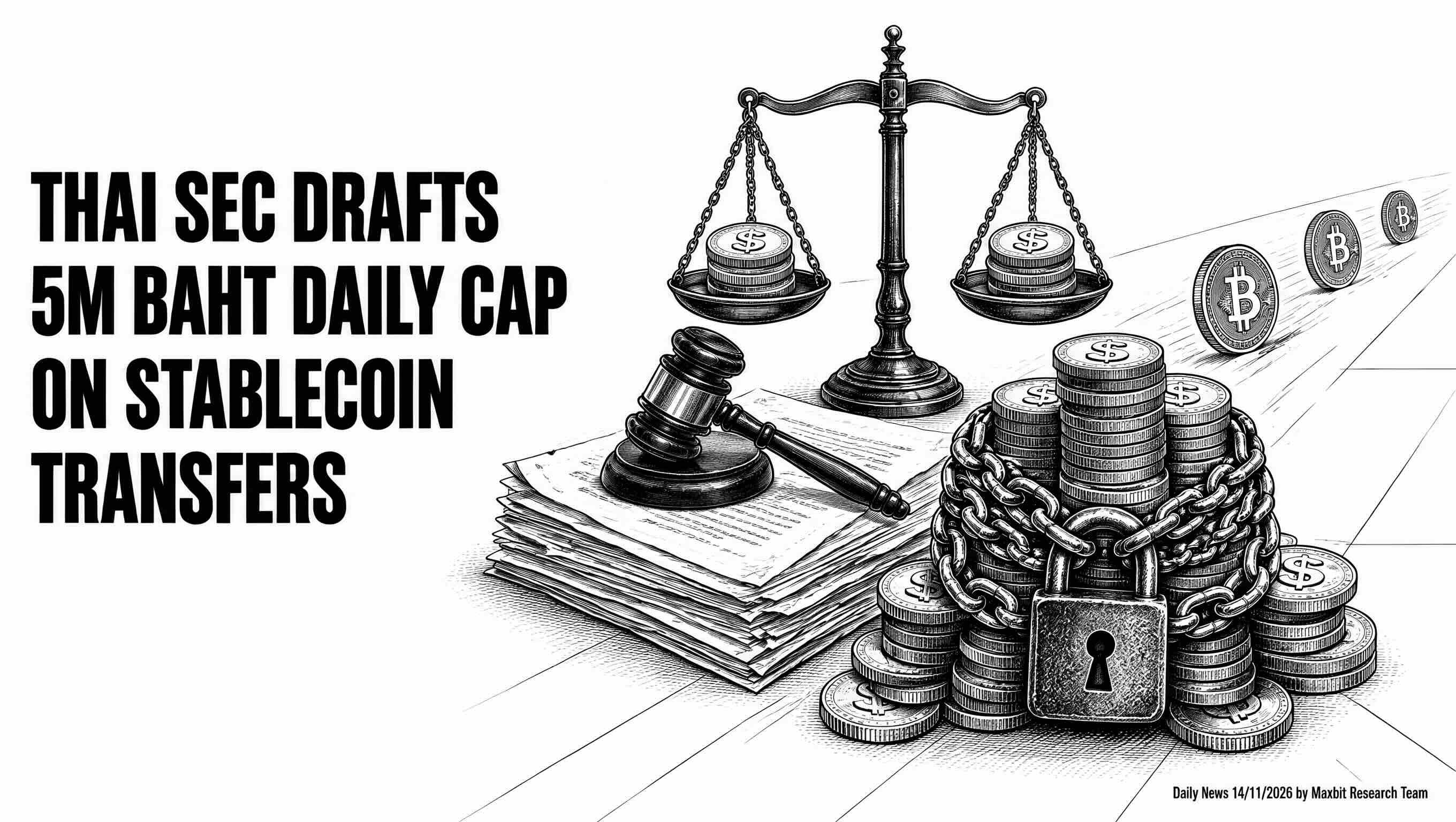
Thailand's Securities and Exchange Commission (SEC) has opened a public consultation on draft rules governing stablecoin transfers such as USDT through licensed digital asset operators. The draft would cap deposits and withdrawals at 5 million baht per day and allow transfers only to and from the customer's own wallets. Comments are open until 26 November 2026. The news comes during a volatile stretch for the crypto market: bitcoin fell below $68,000 on Friday, 13 November, its lowest level since August, at a time when many investors park funds in USDT. This article explains what the draft says, who it affects, where the market stands, and how investors can prepare.
Thai SEC Stablecoin Rules: Key Figures
This draft builds on principles the SEC consulted on in September 2026. This round is the actual draft notification, with more specific details.
| Item | Key point (draft) |
|---|---|
| Stablecoin deposit/withdrawal cap | Up to 5 million baht per day, per person, per licensed operator |
| Source and destination wallets | Must be verified as belonging to the same customer; transfers to or from other people's wallets are prohibited |
| Travel Rule | Sender and recipient data must follow the Travel Rule, with screening for mule accounts and high-risk wallets |
| Cap exemptions | Transfers between customer accounts at Thai operators that both apply the Travel Rule, operators' own accounts, market makers for stablecoin/THB pairs, etc. |
| Off-platform (OTC) trades | Minimum 3 million baht per transaction, public price disclosure, and brokers may not match customers with each other |
| Market makers / LPs | Exchanges must disclose their market makers; brokers must disclose their liquidity providers |
| Comment deadline | 26 November 2026 (still a draft, not yet in force) |
Why the SEC Wants to Regulate USDT Transfers
1. Stopping money laundering and mule accounts
The SEC's main stated goal is to prevent stablecoins from being used for money laundering, technology-enabled crime and evasion of cross-border money transfer rules. Because USDT moves across borders quickly and holds a value close to 1 US dollar, it is easy to use for parking and moving illicit funds. Requiring deposits and withdrawals to go only through the account holder's own wallets directly targets mule accounts.
2. Rapid growth in USDT trading in Thailand
According to Siam Blockchain, growth in USDT trading volume in Thailand is one reason the SEC reviewed its rules. The outlet also reports that foreign-currency stablecoins such as USDT and USDC fall under the SEC's scope, while baht-pegged stablecoins are overseen by the Bank of Thailand.
3. More transparency in off-platform trading
Beyond transfers, the draft requires off-platform (OTC) trades through brokers or dealers to be at least 3 million baht per transaction with public price disclosure, and requires exchanges to disclose their market makers so investors can see who provides liquidity.
⚠️ Warning: Never lend your crypto account or wallet to anyone, and never receive USDT on behalf of strangers, even for a fee. You risk being used as a mule account and may face legal liability. Read more: Common crypto scams and how to avoid them
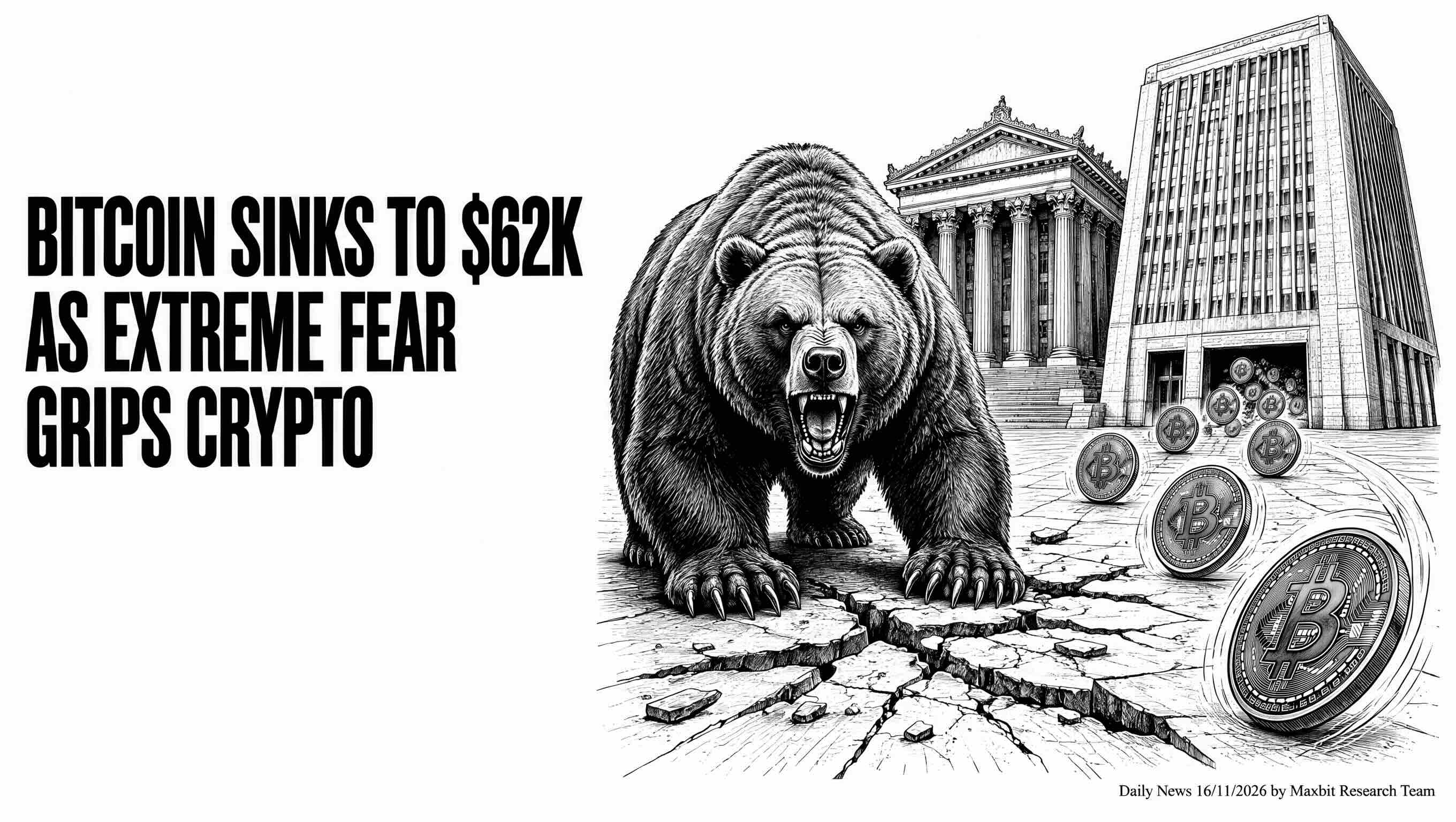
Market Snapshot: Bitcoin Slips Below $68,000
On the same day the stablecoin draft was reported, the crypto market extended the previous day's sell-off (read: Bitcoin falls below $70,000).
- BTC hit an intraday low of roughly $67,600–67,900 (per CoinDesk and CoinGecko data), while ETH traded around $1,920.
- Liquidations across the market reached about $1.47 billion in 24 hours, around $1.31 billion of it from long positions (CoinGlass data via The Block).
- Drivers included hotter-than-expected US inflation that raised fears of a December Fed rate hike, a US dollar index above 103, continued outflows from spot Bitcoin ETFs, and turmoil in tech stocks after Nvidia's CEO resigned.
- The Crypto Fear & Greed Index dropped to 20 (Extreme Fear), according to CryptoTicker.
Support and Resistance Levels to Watch
- Resistance: $70,000 and $72,000, the levels broken during this sell-off. Reclaiming them would ease short-term selling pressure.
- First support: the $67,500–68,000 zone, which CoinDesk reports is near the 200-week moving average.
- Next support: $65,000, a psychological level the market is watching if selling continues.
What Should Investors Do?
- Check your account and wallets. Complete identity verification and use only wallets in your own name when depositing or withdrawing USDT — see What is a crypto wallet?
- Understand stablecoins before parking funds in them — see What is USDT?
- Use platforms regulated by the Thai SEC, which already follow the Travel Rule.
- Avoid high leverage in a falling market and consider gradual DCA investing with spare money — see Bitcoin DCA strategy
- Keep records of your transfers for tax purposes — see Thailand crypto tax 2026
- Share your views on the draft via the Thai SEC website or the government law portal (law.go.th) by 26 November 2026.
Frequently Asked Questions (FAQ)
Does the Thai SEC draft ban trading USDT?
No. The draft governs stablecoin deposits and withdrawals into and out of licensed operators, capping them at 5 million baht per day per person per operator and requiring the customer's own wallet. Trading on platforms regulated by the Thai SEC continues as normal.
When will the new stablecoin rules take effect?
The rules are still a draft open for public comment until 26 November 2026, and no effective date has been announced. Investors should follow the final notification from the Thai SEC.
How are retail investors affected?
Investors who move less than 5 million baht of USDT per day using their own wallets are largely unaffected. The key steps are completing identity and wallet verification and never receiving crypto on behalf of others, which risks being used as a mule account.
Deposit, withdraw and trade USDT and bitcoin with confidence on a platform regulated by the Thai SEC — Sign up for Maxbit
Risk warning: Digital assets are high risk and highly volatile. Investors may lose their entire investment. Please study the information carefully before investing. This article is for informational purposes only and is not investment advice.