



Blockchain is a digital ledger with copies distributed across many nodes, so recording transactions doesn't depend on a single central database. Data is grouped into blocks, linked in order and verified collectively under the network's rules. This increases transparency and makes it hard to alter past records.
Understanding block structure, transaction verification, consensus mechanisms and network types makes both the strengths and limitations of the technology clearer. Using Bitcoin as an example also helps you judge which jobs blockchain suits, and when a regular database may be the better choice.
What is blockchain, and what problems does it solve?
Imagine a digital ledger that isn't stored on a single computer but has copies spread across many nodes in a network. That is the core idea of blockchain, or distributed ledger technology, which lets participants verify the same set of data without relying on one central database.
Data is grouped into blocks, and each block is linked to the previous one by a hash. If past data is altered, the links no longer match and the change is easy to detect. This makes blockchain well suited to jobs that need an auditable history, such as transferring assets or tracing where products come from.
A regular database usually has a central administrator who can add, edit or delete data according to permissions. A blockchain has many nodes hold copies and apply shared network rules before confirming entries. Its strengths are transparency and less reliance on intermediaries, but that doesn't mean every kind of data belongs on such a network.
How does blockchain work, from transaction to new block?

The process starts when a user creates a transaction and sends it to the network. Nodes then check whether it is valid under the relevant permissions and rules. Once selected, multiple transactions are grouped into a new block, linked to the existing chain and broadcast to other nodes.
For example, when a user wants to transfer a digital coin, the wallet creates the transaction details, such as sender, recipient and amount, and signs them with a private key. The signed transaction is broadcast to connected nodes rather than to a single central server.
- Nodes check the digital signature against the relevant public information to confirm the transaction really comes from the rightful owner and hasn't been altered along the way.
- The system checks further conditions, such as whether the balance is sufficient, whether the transaction duplicates an earlier one, and whether it follows the network's rules.
- Verified transactions wait in a pool of entries not yet permanently recorded. Whoever is responsible for creating blocks selects a set of transactions according to the consensus mechanism's rules.
- A block contains transaction data, related ordering or timing information, and a reference to the previous block, with a hash acting like a digital fingerprint of the data.
- Once a new block is confirmed, it references the previous block's hash. If data in an old block is changed, its hash changes and the chain of links no longer lines up.
- The accepted block is passed on to other nodes, which re-verify it according to the rules and save a copy in their own ledgers.
Distributed copies don't mean every node automatically trusts any data. Each node accepts only valid blocks on the chain the network recognizes. Multiple layers of verification reduce the chance that fake or conflicting transactions end up recorded in the same history.
How do consensus mechanisms help the network agree?
A network without a central administrator needs rules to decide which block is valid and which block it should follow. A consensus mechanism selects block producers and ensures nodes share the same transaction history, even when participants don't know or trust each other.
Proof of Work has miners compete to solve computational puzzles that require processing power. The first to succeed earns the right to propose and add a block under the rules. The main costs are electricity, equipment and time. Attacking the network requires enormous computing power, which makes it expensive, but energy use and limited transaction capacity are drawbacks to consider.
Proof of Stake uses assets that validators put up as collateral as one factor in selecting who proposes and attests to blocks. Validators who break the rules may lose their stake under the system's conditions, so there's no need to compete by burning large amounts of electricity. The risk shifts instead to incentive design, decentralization and preventing power from concentrating among large holders.
| Aspect | Proof of Work | Proof of Stake |
|---|---|---|
| Selecting block producers | Competition based on computing power | Selected from those staking assets, according to the rules |
| Main costs | Equipment and electricity | Staked collateral and validation infrastructure |
| Security approach | Makes controlling most of the computing power very expensive | Penalizes validators who misbehave and designs incentives to follow the rules |
| Limitations | High energy use, and block production can become a hardware race | Power may concentrate among large asset holders |
Types of blockchain and levels of network access

Blockchain networks fall into three types based on who can participate and who governs them: public, private and consortium blockchains. Each suits a different level of openness, speed and trust between users.
A public blockchain lets anyone join as a node, send transactions or read data under the network's rules. Verification relies on many nodes and a consensus mechanism, as with Bitcoin, which uses Proof of Work. A private blockchain restricts access to a single organization, whose administrators decide who can read data, verify transactions or create blocks, making access and performance easier to control.
A consortium blockchain sits in between, with several organizations governing the network together, such as banks or supply chain partners. Authorized members verify data jointly, reducing reliance on any one organization while keeping more privacy than a public network.
| Type | Participation | Governance and verification | Best suited for |
|---|---|---|---|
| Public | Open to the public | Many nodes verify under shared rules | Digital assets and systems that need openness |
| Private | Permission required | One organization sets permissions and validators | Internal systems that need control over data and performance |
| Consortium | Limited to member organizations | Several organizations jointly govern and confirm entries | Data sharing between business partners |
Benefits and limitations of blockchain
Blockchain's main strength is letting multiple parties share a ledger and verify transaction history without handing all authority to a single intermediary. It suits jobs that need to prove who did what and in what order data was added, but that doesn't mean all data is always safe or appropriate to record on a network.
- Data recorded and linked by hashes makes retroactive changes easier to detect, and auditors can trace the path of transactions from the same record.
- A shared ledger reduces copying data between organizations and cuts verification steps through intermediaries, but reliability still depends on the source data and the network's rules.
- Large networks with many users may process transactions more slowly when many are waiting. Increasing speed involves trade-offs with security or decentralization.
- Data on public networks can be inspected from many nodes. Even without real names, analysts can link transaction patterns to identities, so personal data should never be stored openly.
- Costs include fees, development, node maintenance and integration with existing systems. Proof of Work networks also use a lot of energy through computational competition, while other mechanisms may use less energy but involve governance trade-offs.
- Recorded data is hard to change and may require a new transaction to offset the original entry, so correction processes, access rights and backups must be designed from the start.
Bitcoin, and how to judge what blockchain is really useful for
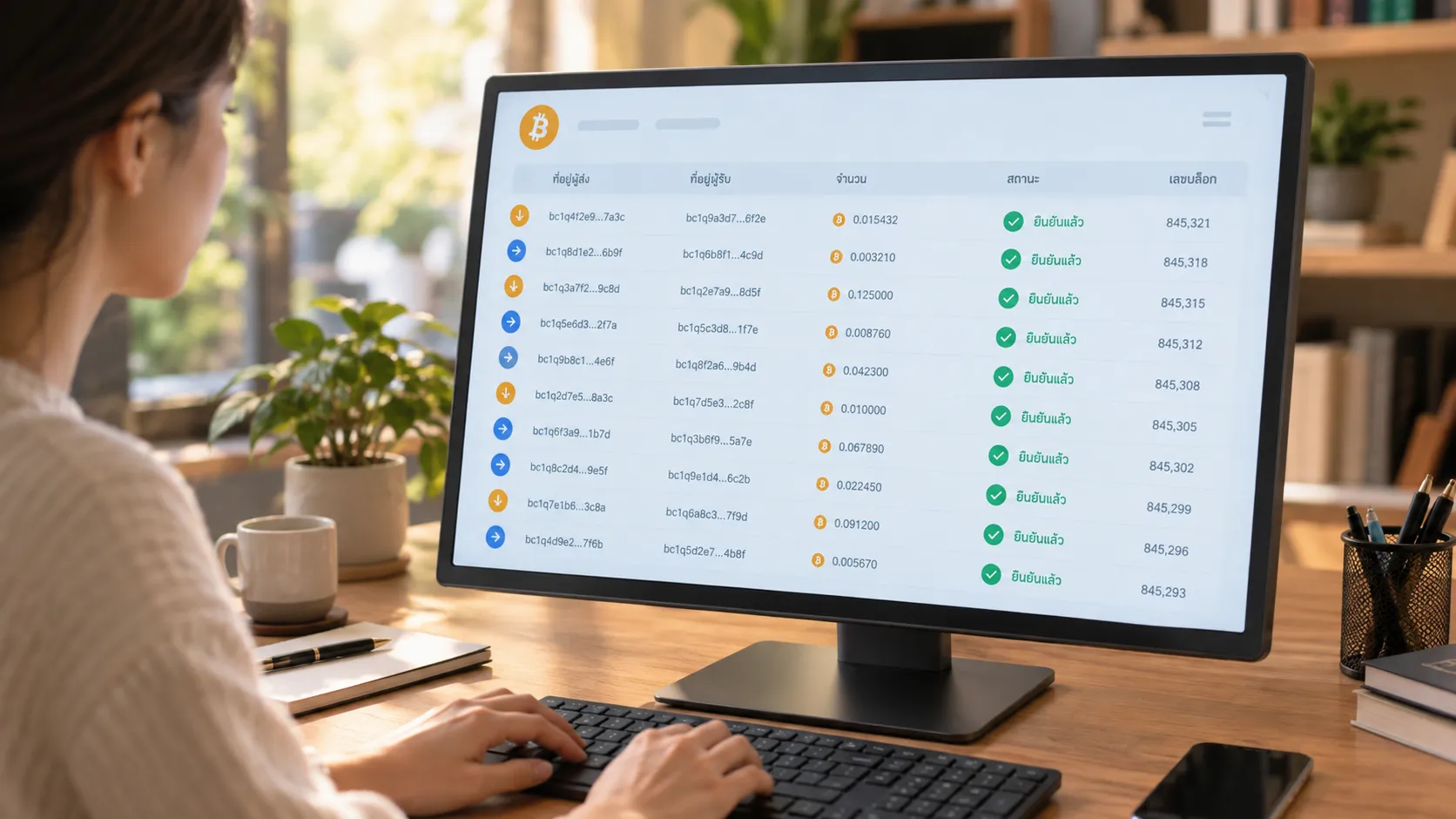
Bitcoin is a case study of a public blockchain that uses a decentralized network to record transfers of value, without participants relying on a central bank to verify transactions. It uses digital signatures to confirm the sender's rights and Proof of Work to help the network decide which block is added next.
This approach suits problems where several organizations need to use the same ledger, don't fully trust each other, and need to audit history, such as tracking asset handovers between business partners. If there is already a trusted central administrator, a regular database is usually faster, cheaper and better suited to deleting or editing data as needed.
Before starting a project, assess the real problem rather than starting from the technology. Blockchain is genuinely useful only when the benefits of a shared ledger and cross-organization verification outweigh the costs in performance and governance.
Use this checklist to screen for fit before investing:
- Define the problem to solve and the results you want to measure, such as reducing document review time or disputes over data ownership.
- Check whether several parties need to write to or read the same ledger, and whether there is no central administrator all parties accept.
- Keep confidential data out of permanent records, and store only hashes or references on the network when necessary.
- Compare against centralized databases and API-based systems on speed, cost, privacy and maintenance burden.
- Pilot with a small project that defines users, confirmation rules and how to fix errors before expanding the network.
- Review legal requirements, access rights and responsibility if data is wrong or digital keys are lost.
Frequently asked questions
Where is blockchain used in real life?
Blockchain is used for jobs where several parties need to use and verify the same data, such as tracing product origins, transferring digital assets, storing certificates and recording financial transactions. Whether it fits depends on the number of participants, the level of transparency needed and whether a system without a central controller is really necessary.
Can I buy BTC through blockchain?
You can buy BTC, but trading usually happens through a platform or exchange service rather than directly from the blockchain itself. Once a transfer is complete, the blockchain records the transaction and makes it possible to verify BTC movements under the network's rules.
Is blockchain a good or bad technology?
Blockchain isn't good or bad in itself; it depends on the problem you want to solve and how the system is designed. Its strengths are shared data and jointly verifiable history, while its limitations can include speed, cost, energy use, privacy and the complexity of maintaining the system.